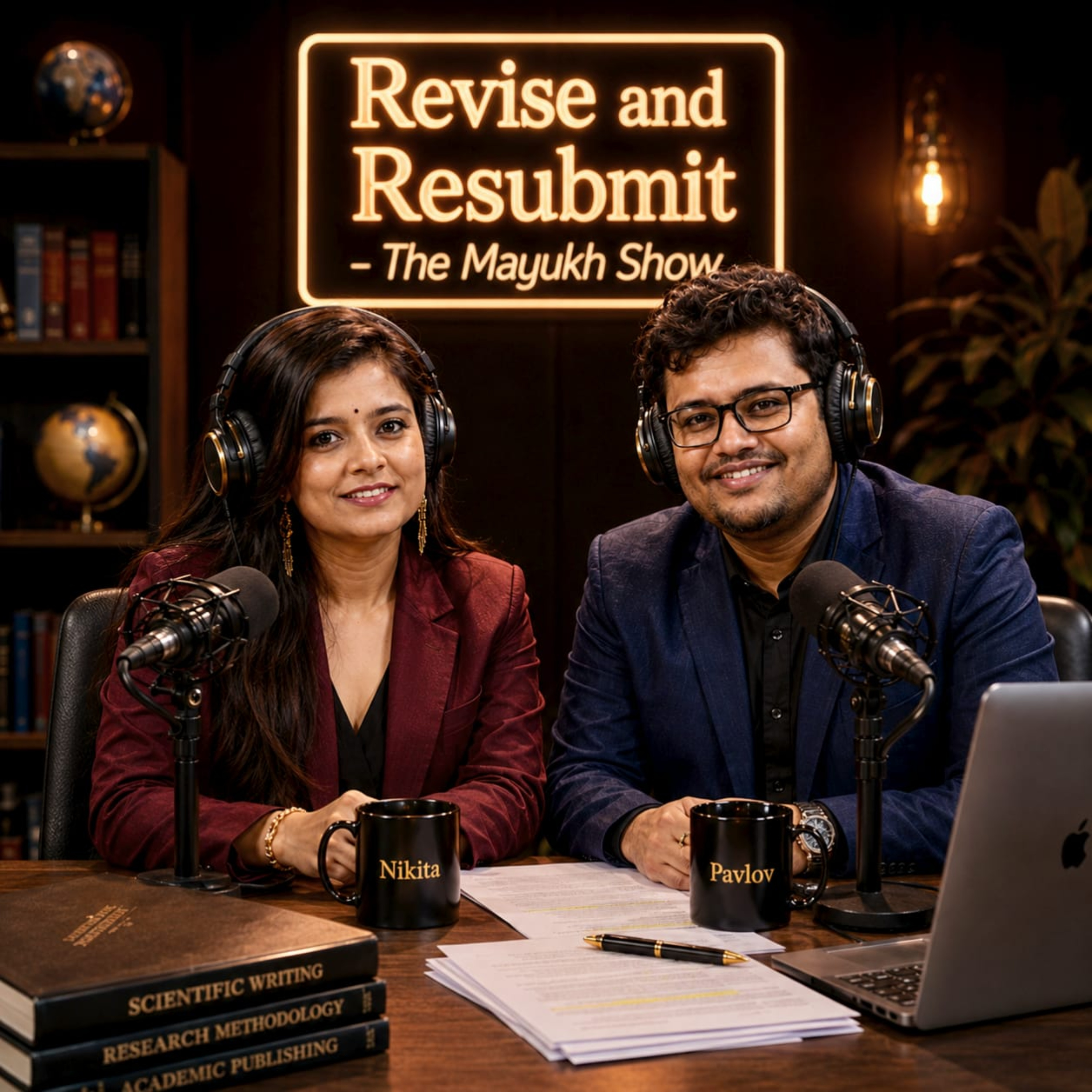
 Revise and Resubmit - The Mayukh Show
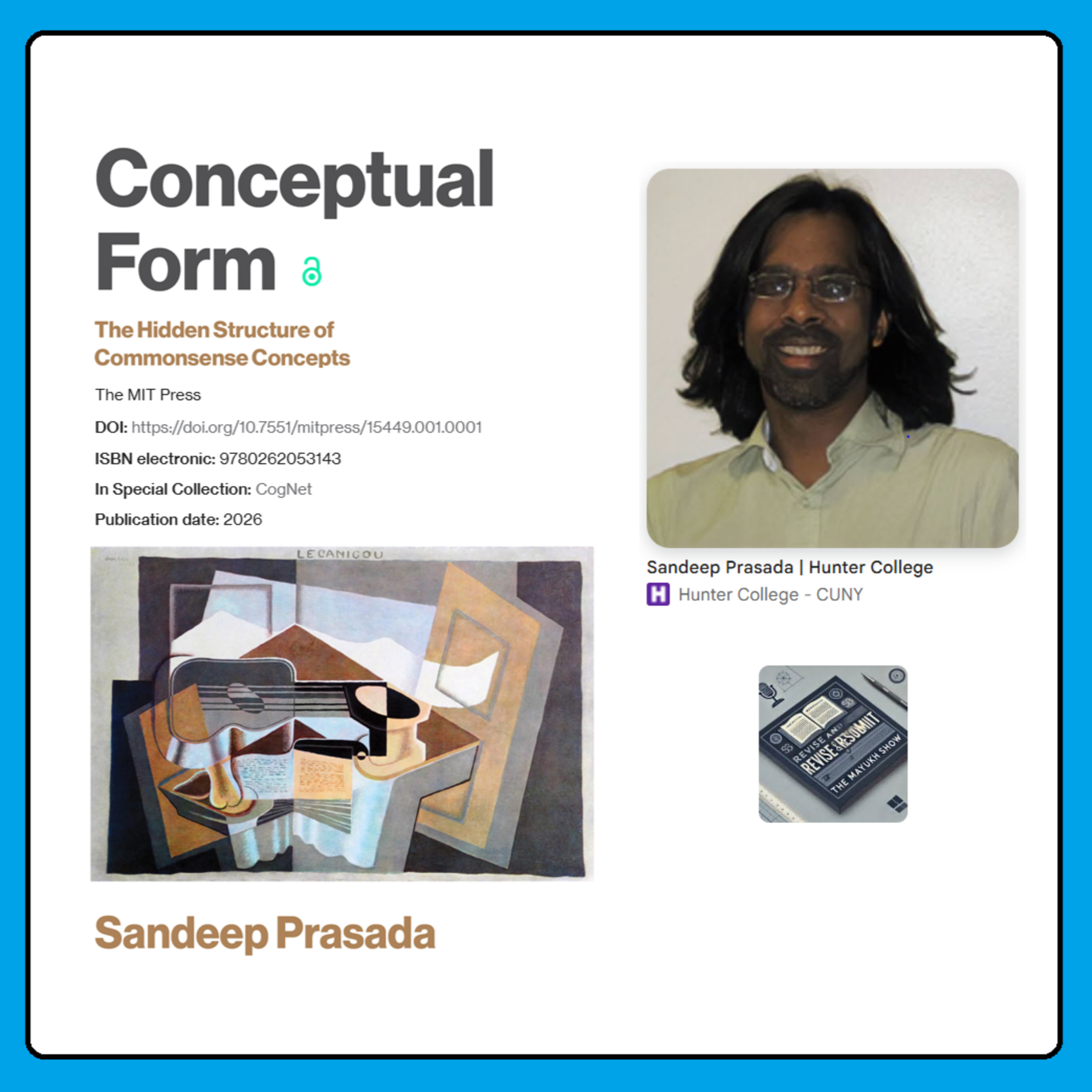
Conceptual Form (Prasada 2026) - Weekend Book Review
À propos de cet épisode
English Podcast starts at 00:00:00
Bengali Podcast Starts at 00:49:57
Hindi Podcast Starts at 01:08:58
Danish Podcast Starts at 01:34:17
Reference
Prasada, S. (2026). Conceptual Form: The Hidden Structure of Commonsense Concepts. The MIT Press. https://doi.org/10.7551/mitpress/15449.001.0001
michellj. (2019). An Interview with Sandeep Prasada, PhD | MindCORE. Upenn.Edu. https://mindcore.sas.upenn.edu/2019/11/01/sandeep-prasada-phd/
Youtube channel link
https://www.youtube.com/@weekendresearcher
Podcast Website
https://mayukhmukhopadhyay.com/reviseandresubmit
AOM SIM Curriculum Committee
https://sim.aom.org/curriculum/curriculum-committee
AOM SIM-Bytes Episode 1 - Dr Ed Freeman
https://sim.aom.org/teaching/simbytes
🎙️ Welcome to Revise and Resubmit, Episode: “Weekend Book Review”.
There are certain things I have always taken for granted. A dog is a dog. A tree is a tree. A book is a book. We rarely stop to ask how, exactly, our minds arrived at such certainty.
And perhaps that is why Sandeep Prasada’s Conceptual Form: The Hidden Structure of Commonsense Concepts caught my attention.
📖 Published on 18 August 2026 by The MIT Press, this is a book about something almost invisible: the hidden structures that allow us to think about the ordinary world with such extraordinary ease.
Prasada, a professor at Hunter College, City University of New York, has spent much of his career asking deceptively simple questions about the machinery of thought. How do we form concepts of dogs, trees, people, freedom or justice? How do these concepts develop? And how are they connected to language, perception and the brain?
With a PhD in Cognitive Science from MIT and research published across leading journals in cognitive science and developmental psychology, Prasada brings that long intellectual journey to this book. 🎓
His central proposal is both subtle and strangely familiar. Concepts such as DOG do not merely contain information about dogs. They provide what he calls “mental lenses”, particular ways of thinking and talking about what a concept represents.
That idea made me pause.
Because perhaps much of what we call common sense is not really as simple as we imagine. Perhaps, beneath the words we use effortlessly every day, there are structures quietly guiding what seems natural, what seems possible, and even what seems necessary.
🧠 The book challenges approaches that explain concepts mainly through prototypes, examples or accumulated knowledge. Instead, Prasada directs our attention towards the formal structures that organise our understanding of kinds and their instances.
For me, that makes this more than a book about philosophy or cognitive science. It becomes a small invitation to look differently at the most ordinary moments of thinking.
After all, if the mind is constantly looking through lenses we rarely notice, how much of the world are we actually seeing for the first time?
🙏 My thanks to Sandeep Prasada and The MIT Press for this fascinating contribution to our understanding of human thought.
And if you enjoy thoughtful conversations about books and ideas, please subscribe to Revise and Resubmit on Spotify and to the Weekend Researcher YouTube channel. 🎧 We are also available on Amazon Prime Music and Apple Podcasts.
So, before we begin, I want to leave you with one question:
If our concepts quietly decide how we see the world, who is really doing the seeing, our eyes, or the hidden structures of the mind? 🤔📚
Discussion 0
Connectez-vous pour participer à la discussion