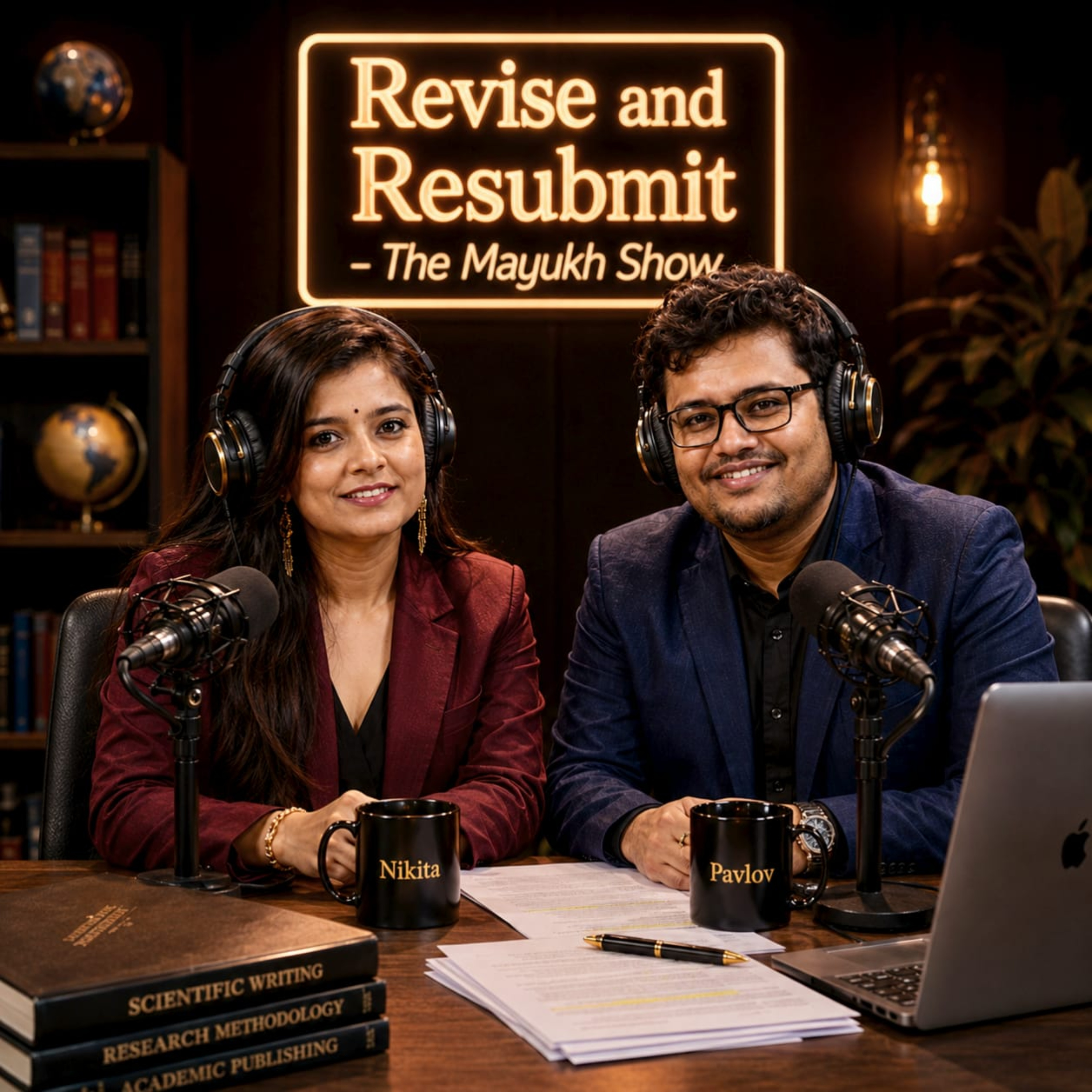
 Revise and Resubmit - The Mayukh Show
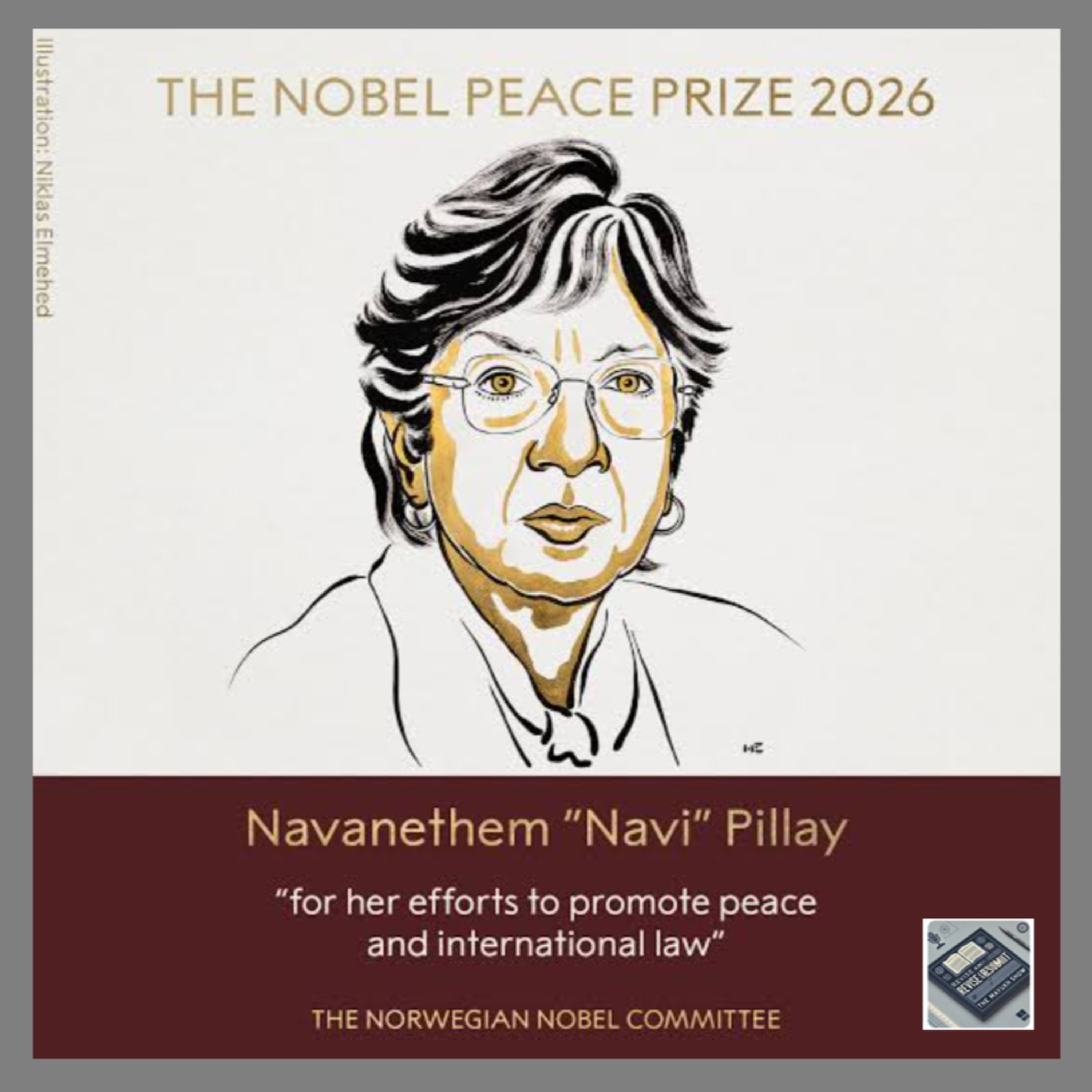
Nobel Peace Prize 2026 - Navanethem "Navi" Pillay
À propos de cet épisode
English Podcast Starts at 00:00:00
Bengali Podcast Starts at 00:19:47
Hindi Podcast Starts at 00:37:25
Danish Podcast Starts at 00:56:03
Nobel Peace Prize 2026. NobelPrize.org. Nobel Prize Outreach 2026. Fri. 9 Oct 2026. <https://www.nobelprize.org/prizes/peace/2026/summary/>
Prize Announcement: https://www.nobelprize.org/prizes/peace/2026/prize-announcement/
Press Release: https://www.nobelprize.org/prizes/peace/2026/press-release/
Youtube Channel
https://www.youtube.com/@weekendresearcher
Podcast Website
https://mayukhmukhopadhyay.com/reviseandresubmit
🎙️ Welcome to Revise and Resubmit.
Imagine standing in a courtroom where the law itself seems to have turned against you. Imagine being told that your race, your gender, and your circumstances have already decided how far you can go. Now imagine refusing to accept that verdict.
✨ Today, we bring you the remarkable story of Navanethem “Navi” Pillay, named recipient of the 2026 Nobel Peace Prize, announced on 9 October by the Norwegian Nobel Committee, in recognition of her efforts to promote peace and international law.
🏆 The Nobel Peace Prize is among the world's most prestigious honours. Yet Pillay's story reminds us that the struggle for peace does not always begin at a negotiating table. Sometimes, it begins with one lawyer, one courageous argument, and one refusal to remain silent.
Born in Durban, South Africa, in 1941, into a poor Tamil-origin family, Pillay grew up under apartheid, a system designed to deny people like her equal opportunities. When no law firm would employ her as a non-white woman, she opened her own practice in 1967. ⚖️
But she did not simply build a career. She challenged a system.
During apartheid, Pillay fought for the rights of political detainees, helping secure basic protections and access to legal counsel for prisoners on Robben Island, including Nelson Mandela. Later, her journey took her to Harvard Law School and onto the international stage, where she served as a judge at the International Criminal Tribunal for Rwanda and the International Criminal Court, and as United Nations High Commissioner for Human Rights.
🌍 One of her most consequential chapters came during the Akayesu trial in Rwanda. The landmark judgment established that rape and sexual violence could constitute acts of genocide under the circumstances of that case. It was a profound moment in the development of international criminal law, and a reminder that justice must recognise not only the violence inflicted, but also the dignity denied.
What strikes me about Pillay's life is the persistence of a single conviction: that law must mean something even when those with power would prefer it to mean nothing.
💫 Her Nobel Peace Prize carries an award of 12 million Swedish kronor. But the larger question her life leaves us with reaches far beyond any ceremony or medal.
🎧 If you enjoy Revise and Resubmit, subscribe to us on Spotify and to Weekend Researcher on YouTube. You can also find the channel on Amazon Prime and Apple Podcasts.
❓ And here is the question I want to leave with you: when justice demands that we confront the powerful, what matters more, the courage to speak the truth, or the willingness to keep speaking when the world refuses to listen?
Discussion 0
Connectez-vous pour participer à la discussion