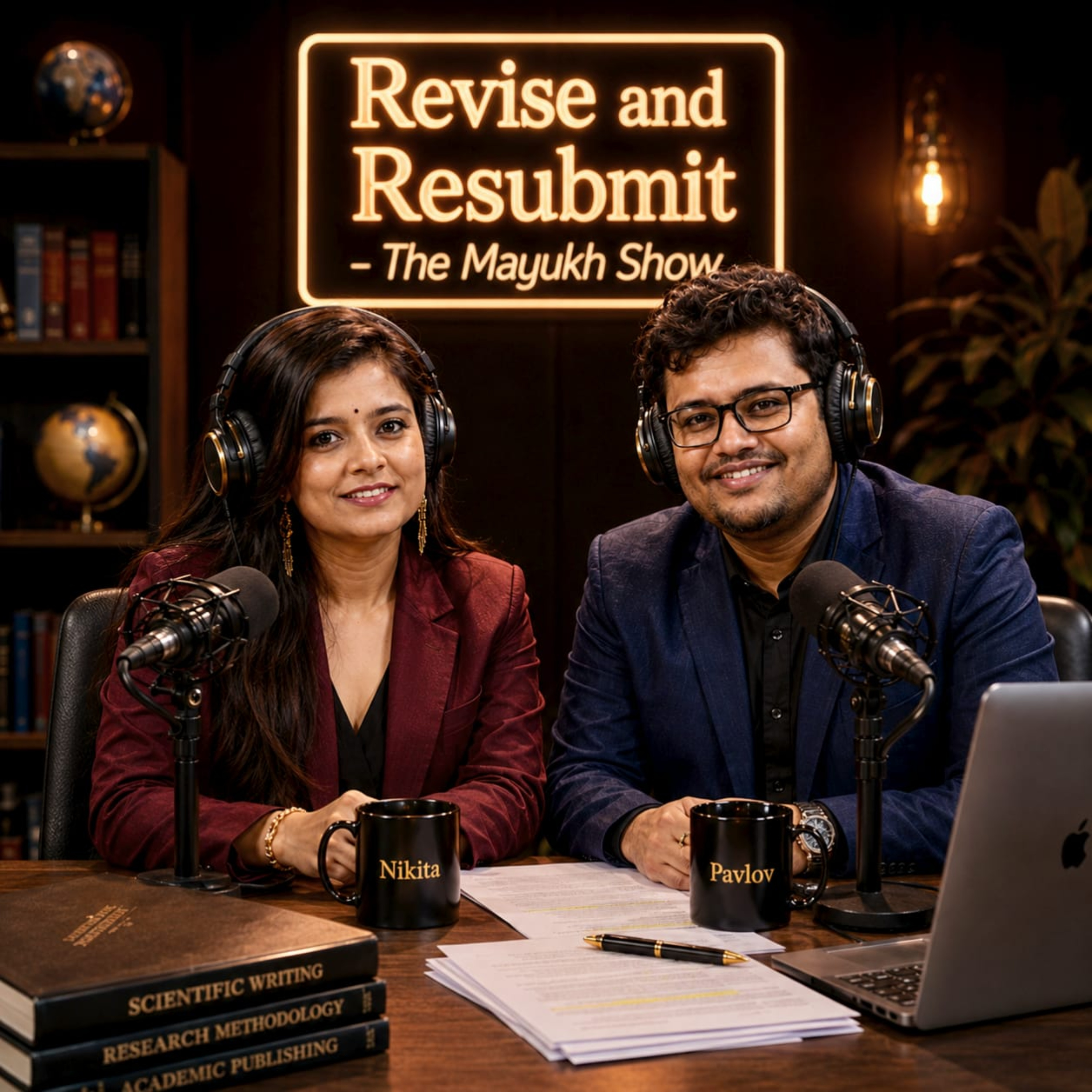
 Revise and Resubmit - The Mayukh Show
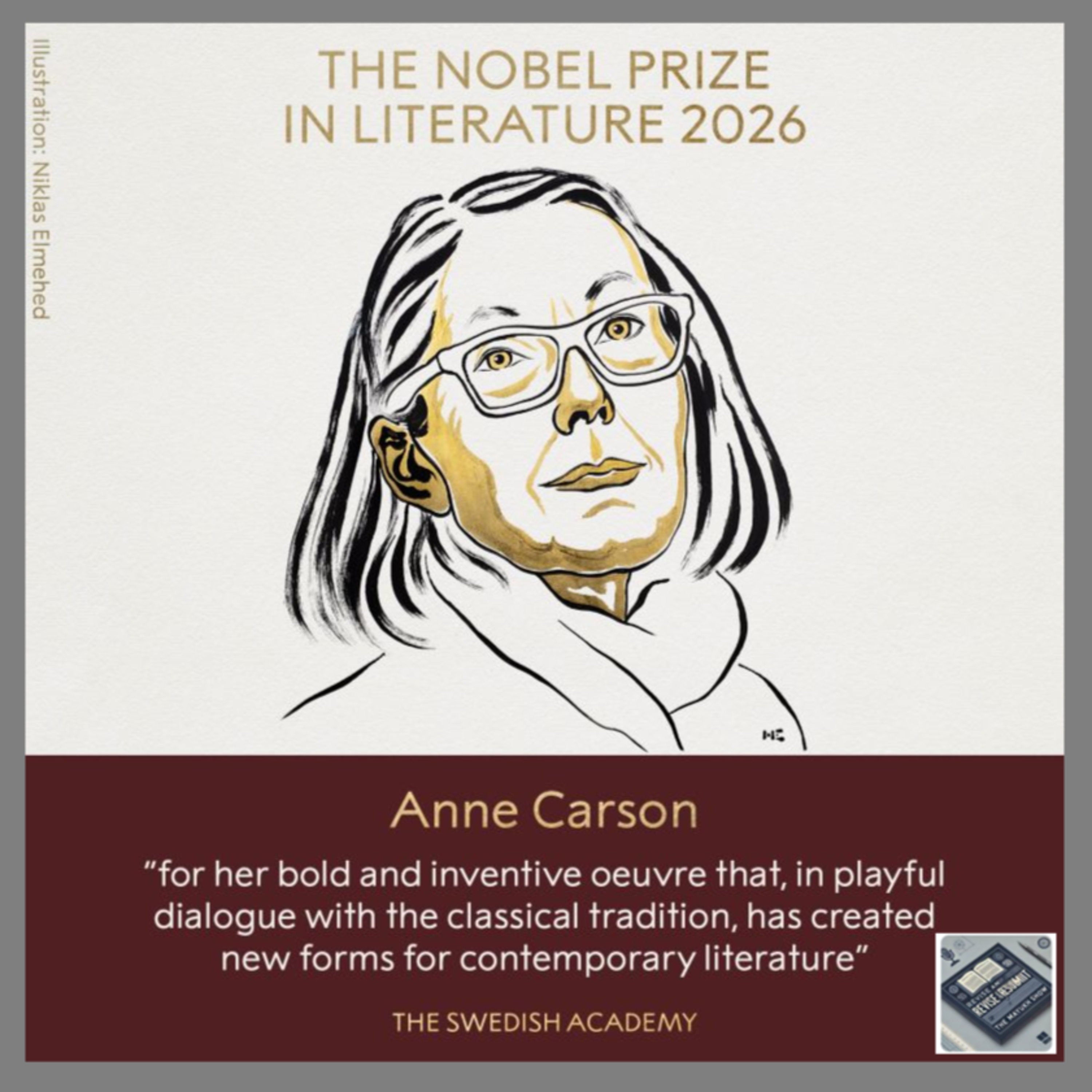
Nobel Prize in Literature 2026 - Anne Carson
À propos de cet épisode
English Podcast Starts at 00:00:00
Bengali Podcast Starts at 00:19:23
Hindi Podcast Starts at 00:37:05
Danish Podcast Starts at 00:49:26
Nobel Prize in Literature 2026. NobelPrize.org. Nobel Prize Outreach 2026. Thu. 8 Oct 2026. <https://www.nobelprize.org/prizes/literature/2026/summary/>
Press release: https://www.nobelprize.org/prizes/literature/2026/press-release/
Biobibliography: https://www.nobelprize.org/prizes/literature/2026/bio-bibliography/
Youtube Channel
https://www.youtube.com/@weekendresearcher
Podcast Website
https://mayukhmukhopadhyay.com/reviseandresubmit
🎙️ Welcome to Revise and Resubmit.
There are writers who tell stories. There are writers who reshape stories. And then there are writers who make you wonder whether the old boundaries between poetry, history, scholarship, and imagination were ever really necessary in the first place.
Today, we turn to Anne Carson, recipient of the 2026 Nobel Prize in Literature, announced on 8 October 2026 by the Swedish Academy. 🏆📚
The Nobel Prize in Literature is one of the most prestigious honours in the world of letters, and Carson has received it “for her bold and inventive oeuvre that, in playful dialogue with the classical tradition, has created new forms for contemporary literature.”
Born in Toronto in 1950, Carson fell in love with ancient Greek while still at school. She went on to earn her BA, MA, and PhD in Classics from the University of Toronto, before building a remarkable academic career teaching classics, comparative literature, and creative writing at institutions including McGill, Michigan, NYU, Princeton, and Stanford.
But Carson's real territory is difficult to map. 🌀
She moves between poetry, fiction, translation, scholarship, mythology, and visual art with the confidence of someone who knows that a literary rule is sometimes most interesting when you quietly break it.
In Eros the Bittersweet, she examines desire through the lens of ancient literature. In Autobiography of Red, she transforms the myth of Geryon into something startlingly modern. If Not, Winter brings Sappho's fragments back into conversation with contemporary readers, while Nox turns mourning, memory, translation, and the physical book itself into an extraordinary artistic object. ✍️🏺
And perhaps that is what makes Carson so intriguing. She doesn't simply bring the ancient world into the present. She makes the two worlds speak to one another, sometimes tenderly, sometimes mischievously, and often in ways we did not expect.
💫 Carson receives the Nobel Prize and 12 million Swedish kronor, but perhaps the more interesting prize is the invitation her work offers us: to read differently.
🎧 If you enjoy Revise and Resubmit, subscribe on Spotify and to Weekend Researcher on YouTube. You can also find the channel on Amazon Prime and Apple Podcasts.
So, before we turn the page, here is the question I cannot quite escape:
❓ If an ancient voice can still speak to us after two thousand years, what does that tell us about the stories we believe belong only to our own time?
Discussion 0
Connectez-vous pour participer à la discussion