 Revise and Resubmit - The Mayukh Show
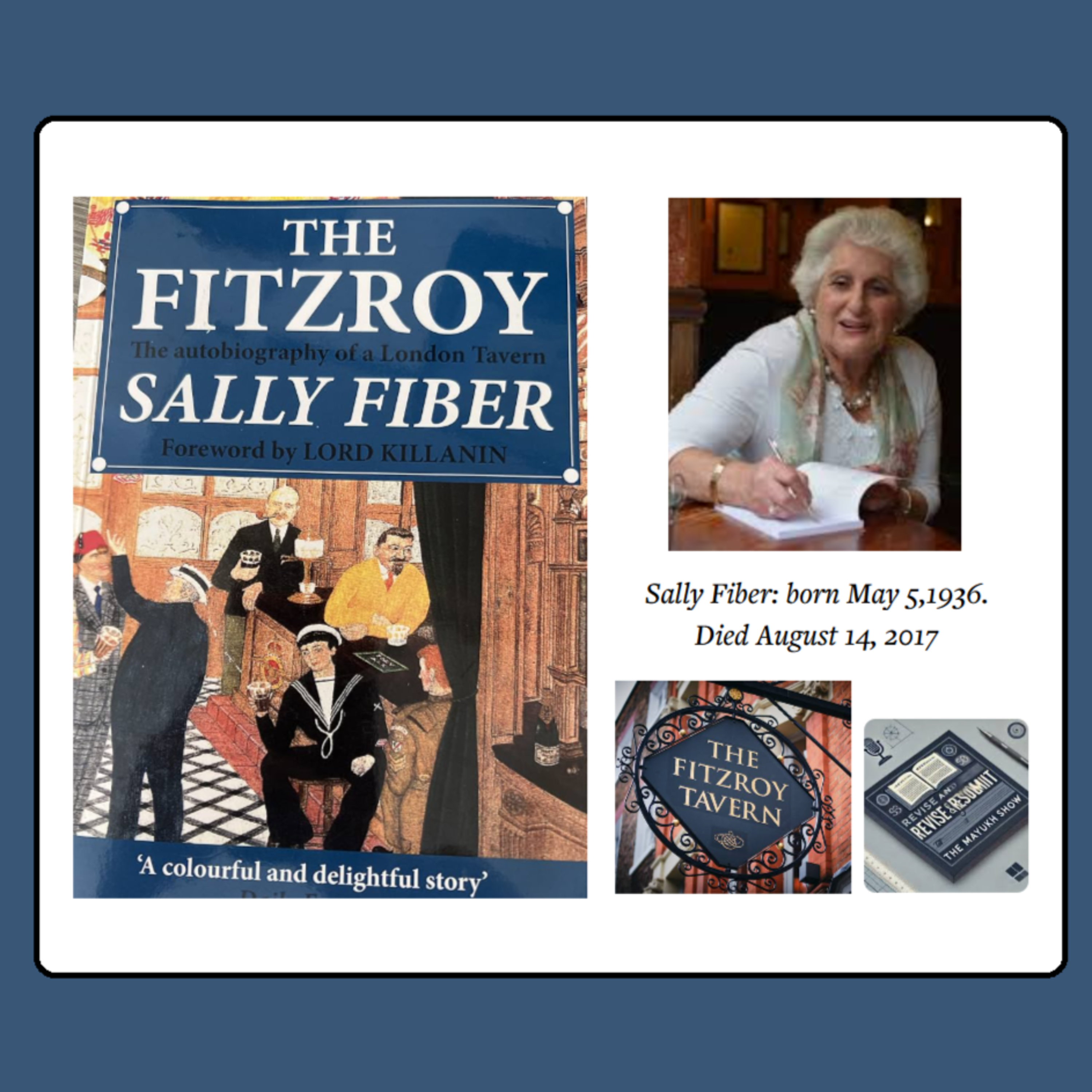
The Fitzroy (Sally Fiber 1995) - Weekend Classics
À propos de cet épisode
English Podcast starts at 00:00:00
Bengali Podcast Starts at 00:25:03
Hindi Podcast Starts at 00:41:32
Danish Podcast Starts at 00:58:55
Reference
The Fitzroy: The Autobiography of a London Tavern: by Sally Fiber, (co-authored with Clive Powell-Williams), Temple House Books [an imprint of The Book Guild Ltd], 1995, 114 pp., ISBN: 9781857760231. https://www.abebooks.com/signed-first-edition/Fitzroy-Autobiography-London-Tavern-Fiber-Sally/31922800663/bd
Youtube Channel
https://www.youtube.com/@weekendresearcher
Podcast Website
https://mayukhmukhopadhyay.com/reviseandresubmit
🎙️ Welcome to Revise and Resubmit, the episode Weekend Classics.
There are books that tell us about a place, and then there are books that make us feel we have briefly stood inside it. This week, I found myself stepping through the doors of a London pub that seems to have gathered an entire vanished world around itself.
📖 The Fitzroy: The Autobiography of a London Tavern, published on 21 August 1995 by Temple House Books, is Sally Fiber's remarkable act of remembrance, written with Clive Powell-Williams. And perhaps nobody could have written this particular book quite as she did.
Fiber was born in 1936 and grew up inside the Fitzroy Tavern. Her grandfather, Judah "Pop" Kleinfeld, and later her parents ran the establishment. So when she writes about the Fitzroy, she isn't looking back at history from a comfortable distance. She is remembering the rooms in which she grew up, the people who passed through them, and the strange mixture of affection, danger, fame and ordinary life that surrounded her childhood.
🍻 And what people they were.
Dylan Thomas drank here. Augustus John drew a self-portrait in her mother's autograph book. George Orwell, Nina Hamnett and Jacob Epstein belonged to the world that gathered around this corner of Fitzrovia. Yet Fiber also remembers detectives, politicians, Albert Pierrepoint, police raids, scandal, murder and courtroom battles.
That contrast is what stayed with me.
The Fitzroy was somehow both literary salon and rough neighbourhood pub. A place where art and gossip could occupy the same table, where a memorial for Dylan Thomas could take place in the bar, and where charity collections could quietly change children's lives.
🌃 Reading Fiber, I kept thinking about how cities disappear without really leaving. Buildings remain. Street names remain. Perhaps even the pubs remain. But the particular people, voices and rituals that gave those places their meaning slowly become impossible to recover.
This book is Fiber's attempt to recover them.
And perhaps that is why a tavern can have an autobiography at all. If a building can remember through the people who passed through it, then what exactly are we losing when a neighbourhood loses its old gathering places?
🤔 So, when a place becomes famous for the people who once inhabited it, are we really remembering the place itself, or are we remembering a version of ourselves that no longer exists?
My thanks to Sally Fiber and Clive Powell-Williams, and to Temple House Books, an imprint of The Book Guild Ltd, for this fascinating journey into Fitzrovia's past.
🎧 If you enjoyed this episode of Weekend Classics, please subscribe to Revise and Resubmit on Spotify and to the Weekend Researcher YouTube channel. You can also find the channel on Amazon Prime Music and Apple Podcasts.
Until next time, keep reading, keep questioning, and perhaps occasionally look twice at the old places we think we already know. 📚🍻
Discussion 0
Connectez-vous pour participer à la discussion